
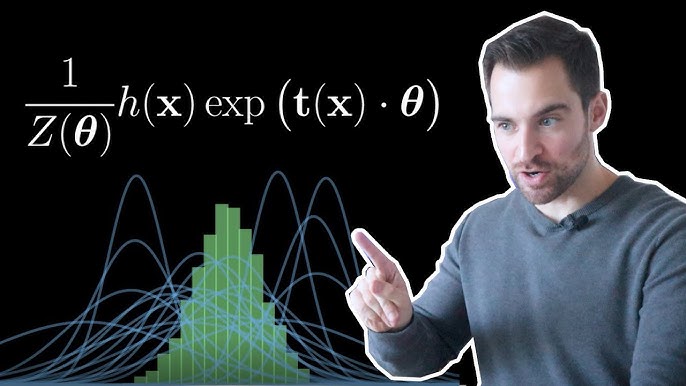
In the world of data science, every equation tells a story, and the exponential family is like a well-organised library that stores the most elegant of them all. It’s a collection of probability distributions—such as Gaussian, Bernoulli, and Poisson—that share a unique mathematical structure. Much like a skilled conductor harmonising instruments in an orchestra, this family brings order and structure to diverse distributions, allowing data scientists to model uncertainty with elegance and precision.
Through this framework, complex relationships between variables are transformed into understandable patterns, enabling better predictions and more generalised learning across domains.
The Beauty of Mathematical Harmony
Think of the exponential family as the “universal grammar” of probability distributions. Just as languages share patterns that help us communicate meaning, distributions within this family share a common exponential form that simplifies statistical modelling.
This shared structure allows researchers to unify various probability models under a single umbrella. It’s not about forcing uniformity—it’s about revealing the underlying symmetry that connects them. For learners exploring deeper mathematical modelling, a data science course in Mumbai offers structured insight into how this framework simplifies predictive analytics and statistical learning across real-world applications.
The idea isn’t just theoretical elegance—it’s practical brilliance. From logistic regression to natural language processing, the exponential family provides the foundation for algorithms that learn efficiently and scale seamlessly.
Sufficient Statistics: The Essence of Data Simplification
Imagine trying to capture the essence of an entire novel using just a few sentences. That’s what sufficient statistics do in the world of data. They summarise datasets in a way that preserves all necessary information for parameter estimation while discarding unnecessary details.
For instance, the mean is a sufficient statistic for a normal distribution—knowing it tells you everything needed to model the data’s behaviour. This concept lies at the heart of the exponential family, offering efficiency in both computation and interpretation.
By understanding sufficient statistics, analysts can identify the smallest set of values that fully represent their data, turning mountains of raw information into concise, meaningful summaries. Programmes such as a data scientist course often delve into this idea, showing how sufficiency helps streamline real-world analytical workflows.
The Bridge to Generalised Linear Models (GLMs)
The power of the exponential family extends far beyond probability theory—it forms the backbone of generalised linear models. GLMs allow analysts to model complex relationships between dependent and independent variables, bridging regression techniques and probabilistic reasoning.
Think of GLMs as the “universal adapter” that connects various statistical tools. Whether modelling binary outcomes in logistic regression or count data in Poisson regression, the exponential family provides a common foundation for flexible and interpretable models.
This connection is why many modern machine learning algorithms trace their lineage back to the structure of the exponential family—it’s the hidden architecture that makes prediction possible.
Real-World Applications: From Healthcare to AI
The reach of the exponential family extends into nearly every modern industry. In healthcare, Poisson distributions are used to model disease incidence rates. In marketing, logistic regression helps identify customer conversion probabilities. In artificial intelligence, algorithms based on exponential family distributions underpin generative models and probabilistic reasoning systems.
By recognising these underlying patterns, data scientists can choose the most appropriate distribution for their models, leading to more accurate predictions and more reliable outcomes.
Learners mastering these techniques through a data science course in Mumbai gain not just technical knowledge but also an intuition for how probability shapes decision-making across domains.
Why It Matters: The Mathematical Thread of Modern Analytics
What makes the exponential family so vital isn’t just its mathematical appeal—it’s its universality. It bridges theory and application, simplifying complex relationships and enabling scalable computation. Every model that predicts customer churn, detects fraud, or forecasts demand owes a subtle debt to this family of distributions.
For aspiring professionals, mastering this concept isn’t optional—it’s foundational. Structured learning, such as a data scientist course, transforms abstract formulas into tools for real-world innovation.
Conclusion
The exponential family stands as one of the most profound unifying ideas in statistics and data science. It binds diverse probability distributions through a single, elegant expression—one that balances simplicity with power. Like a compass guiding explorers through the vast landscape of data, it directs analysts toward models that are both interpretable and efficient.
Understanding this family means understanding the core of modern predictive modelling. For those seeking to harness data’s full potential, it’s not merely about memorising equations—it’s about learning the language that connects them all.
Business Name: ExcelR- Data Science, Data Analytics, Business Analyst Course Training Mumbai
Address: Unit no. 302, 03rd Floor, Ashok Premises, Old Nagardas Rd, Nicolas Wadi Rd, Mogra Village, Gundavali Gaothan, Andheri E, Mumbai, Maharashtra 400069, Phone: 09108238354, Email: enquiry@excelr.com.
