
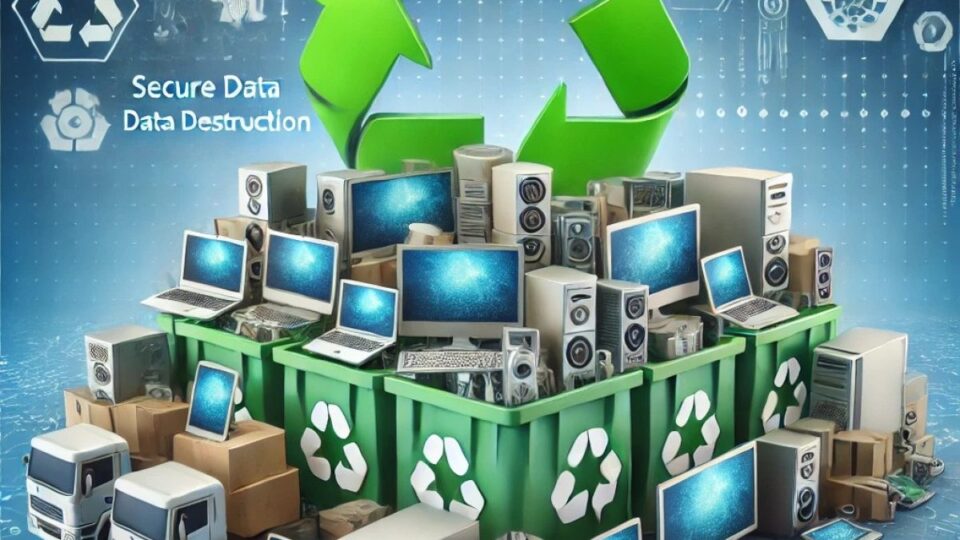
When we choose to recycle electronics, we set in motion a chain of events that most of us never witness, spanning continents and touching ecosystems we will never see. Yet the decision itself, made in a moment at a collection bin or recycling centre, carries weight far beyond what its simplicity suggests. Behind every discarded smartphone and obsolete laptop lies a story of extraction, consumption, and consequence.
The Hidden Toll of Electronic Production
To understand why proper disposal matters, we must first trace the journey backwards, to the origins of our devices. A single smartphone contains more than 60 different elements from the periodic table. Extracting these materials from the earth leaves scars. In the Democratic Republic of Congo, coltan mining for capacitors devastates rainforests. In China’s Baotou region, rare earth extraction creates toxic lakes. In Chile’s Atacama Desert, lithium operations drain aquifers that indigenous communities have depended on for generations.
Manufacturing a single computer requires approximately 240 kilograms of fossil fuels, 22 kilograms of chemicals, and 1,500 litres of water, according to United Nations University research. When we discard these devices prematurely, we discard not just the product but all the resources and environmental damage embedded in its creation.
What Happens When E-Waste Escapes Proper Channels
Singapore generates approximately 60,000 tonnes of electronic waste annually, yet the National Environment Agency reports that only 6% currently enters formal recycling systems. The remaining 94% follows darker paths. Some gets incinerated at waste-to-energy plants, releasing toxic emissions. Heavy metals vaporise at high temperatures, and even sophisticated scrubbers cannot capture everything.
Other e-waste lands in Asia’s informal recycling sector. In sprawling facilities across Southeast Asia, workers dismantle electronics without protective equipment, breathing fumes from burning plastic, exposing skin to lead solder, handling mercury-laden components with bare hands. Children work alongside adults, their developing bodies absorbing toxins that will affect them for decades.
The environmental contamination spreads in concentric circles from these sites. Soil tests reveal lead concentrations hundreds of times above safe levels. Groundwater carries cadmium and chromium into agricultural systems. Studies of workers and nearby residents show elevated blood lead levels, respiratory problems, and neurological damage.
The Singapore Context
Singapore faces unique challenges in managing electronic waste. As a densely populated island nation with limited land for disposal, every tonne of waste that avoids landfilling or incineration represents a victory. The government has recognised this reality through increasingly stringent regulations.
The Extended Producer Responsibility scheme, implemented in 2021, marked a turning point. Under this framework, producers and retailers of electronic equipment must fund collection and recycling systems. The National Environment Agency reports that the scheme aims to collect 60,000 tonnes of e-waste annually by 2026, effectively capturing the entire waste stream.
Singapore’s network of collection points now exceeds 600 locations, distributed across Housing Development Board estates, community centres, and retail establishments. Yet infrastructure alone cannot solve the problem without public participation.
Best Practices for Responsible Disposal
Understanding proper e-waste recycling procedures transforms good intentions into effective action. The following practices, drawn from environmental agencies and recycling industry standards, provide a framework for responsible disposal.
Before Disposal
Evaluate necessity:
Determine whether the device truly requires replacement or could be repaired. Singapore’s repair cafes and social enterprises extend device lifespans affordably.
Secure data thoroughly:
Use multiple-pass data wiping software rather than simple deletion. For highly sensitive information, consider professional data destruction services.
Remove batteries:
Lithium-ion batteries pose fire risks during collection and processing. Store them separately and deposit in designated battery collection bins.
Keep components together:
Cables, chargers, and accessories should accompany the main device when possible, as these components contain recyclable materials.
During Disposal
Use designated collection points:
Never place electronics in general waste or standard recycling bins. Locate e-waste specific collection facilities through the National Environment Agency website.
Transport carefully:
Prevent damage during transport that might release hazardous materials or complicate recycling processes.
Follow posted instructions:
Collection points often have specific requirements for different device types. Adherence ensures proper downstream processing.
Understanding the Recovery Process
What happens after you deposit a device reveals why proper disposal matters. Authorised recyclers in Singapore employ sophisticated processes that maximise material recovery whilst containing environmental hazards. Devices undergo manual dismantling by trained technicians who separate components according to material composition.
Circuit boards travel to specialised facilities where precious metals are extracted. A tonne of circuit boards yields approximately 250 grams of gold, along with significant quantities of silver, copper, and palladium. These recovered metals re-enter manufacturing supply chains, reducing demand for virgin mining.
Plastics are sorted by polymer type, then shredded and reprocessed into pellets for manufacturing. Glass from screens undergoes crushing and cleaning before reuse. The National Environment Agency reports that proper recycling of electronics can recover up to 95% of materials in electronic devices, transforming waste into resources.
The Mathematics of Impact
Individual action accumulates into collective change. If every household in Singapore properly recycled just one additional electronic device annually, the island would divert thousands of tonnes from incineration, recover millions of dollars worth of materials, and prevent significant quantities of toxins from entering the environment.
Yet the current trajectory suggests we are losing ground. Global e-waste generation increases by 3-4% annually, outpacing population growth. Without intervention, the United Nations predicts global e-waste will reach 74 million tonnes by 2030, up from 54 million tonnes in 2019.
The Choice We Face
The decision to properly recycle electronics represents more than an environmental gesture. It is a recognition of interconnection, an acknowledgement that our consumption in Singapore affects workers in Malaysia, ecosystems in China, and communities across the developing world. The infrastructure exists. The knowledge is available. What remains is the daily choice, repeated across millions of households, to do what evidence and conscience both demand.
