
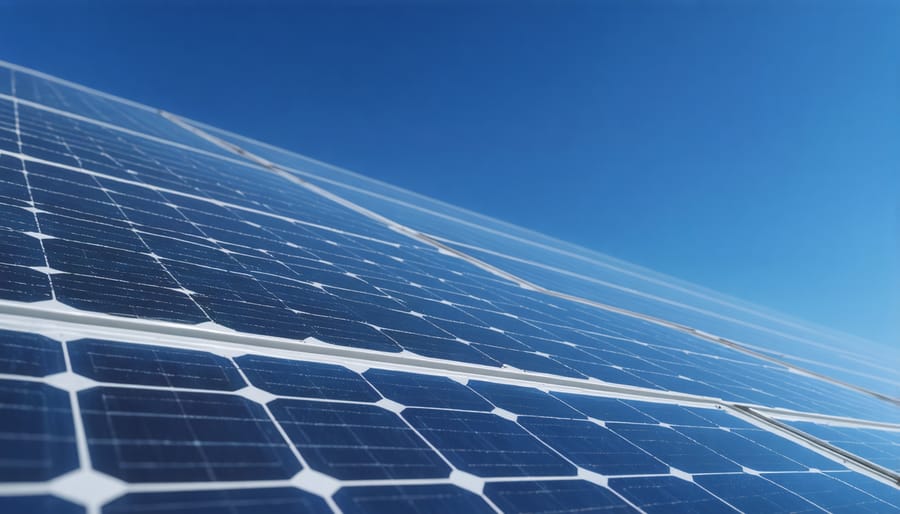
With electricity costs in Thailand continuing to rise, many homeowners and business owners are turning toward solar energy as a long-term solution. However, the first hurdle most face is the technical jargon. Specifically, how many types of solar panels are there, and which one actually delivers the best return on investment for the Thai climate?
Choosing the wrong technology can lead to underperformance or a longer payback period. In this guide, we break down the complexities of solar technology to help you make an informed decision.
How Many Types of Solar Panels Are There and Which Technology Dominates Today?
When exploring solar solutions, you will primarily encounter three categories. Understanding the nuances of แผงโซลาร์เซลล์ มีกี่ประเภท (how many types of solar panels there are) is essential because each type utilizes different silicon structures, affecting both space efficiency and price.
Monocrystalline Solar Panels: Recognizable by their dark, uniform look and rounded edges. These are made from high-purity silicon, offering the highest efficiency rates (typically 20%+) and the best performance in low-light conditions.
Polycrystalline Solar Panels: These have a blue, speckled appearance. While they are more affordable to produce, they are slightly less efficient and require more roof space to produce the same amount of power as Monocrystalline.
Thin-Film Solar Panels: A flexible, lightweight option. While they are the least efficient, they are ideal for non-traditional surfaces or large-scale industrial projects where weight is a primary concern.
For most residential installations in Thailand, Monocrystalline has become the gold standard due to its ability to maximize power generation in limited roof spaces.
3 Overlooked Metrics When Choosing Solar Panels:
Beyond the basic types, forward-thinking investors examine the advanced performance metrics in the technical specifications. These three factors can significantly impact your system’s lifespan:
1. The Temperature Coefficient: A common misconception is that higher heat improves solar performance. In reality, solar panels lose efficiency as temperatures rise. Panels with a lower temperature coefficient experience less performance drop under high heat. In hot climates like Thailand, selecting panels with strong thermal stability ensures more consistent energy output throughout the year.
2. The 25-Year Degradation Rule: Not all panels age the same. Premium panels are guaranteed to retain at least 80-90% of their original output after 25 years. A cheaper panel might save you 10% today but lose 30% of its power generation within a decade.
3. The Efficiency vs. Area Ratio: When roof space is limited, system design efficiency becomes critical. The key metric is wattage per square meter – not just cost per panel. High-efficiency Monocrystalline panels generate more power within the same footprint, often requiring up to 20% less installation area compared to Polycrystalline panels.
How to Choose the Right Solar Setup? The Solution to Defeating High Electricity Bills
Selecting the right panel is only half the battle; the solution lies in matching the technology to your specific consumption patterns.
– For Urban Households: If you have a standard roof and high daytime AC usage, a Monocrystalline system is the most effective solution. It provides the highest yield during peak hours, directly offsetting the most expensive electricity rates.
– For Large Commercial Warehouses: If roof space is abundant and the primary goal is a lower initial CAPEX, Polycrystalline might still offer a compelling business case.
– The Professional Edge: Partnering with an expert like Ewave ensures that your system isn’t just a set of panels, but a precision-engineered energy solution. From site surveys to choosing the right inverter technology, professional guidance ensures your transition to green energy is seamless and profitable.
Navigating the world of renewable energy starts with a simple yet critical question: How many types of solar panels are there? As we have explored, the answer is not merely about counting types, but about understanding which technology best aligns with your specific environment, available space, and financial goals.
While monocrystalline panels stand out as the high-efficiency leader for Thailand’s climate, the “best” panel is ultimately the one that delivers the most reliable return on investment over its 25-year lifespan. By focusing on key quality metrics-such as temperature coefficients and degradation rates-homeowners can transform their rooftops into long-term financial assets.
Ewave is committed to simplifying this transition. Beyond providing high-tier solar technology, we offer the expertise required to design systems that maximize every ray of sunshine. Don’t just install solar-invest in a sustainable future with a partner who understands the science behind the power.
