
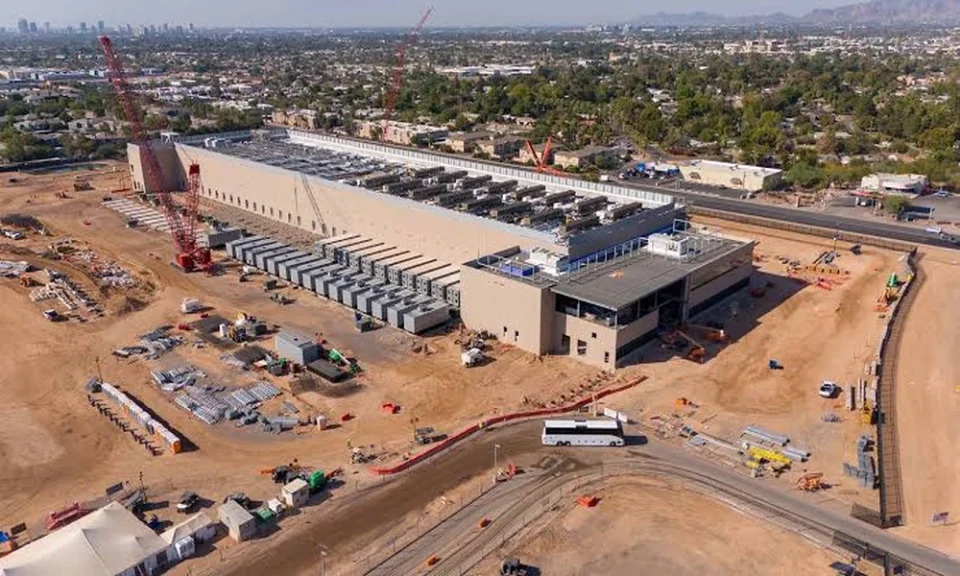
Data center site selection often still gets reduced to two numbers, land price and power cost, treated as though they capture the full economics of a facility expected to run for thirty years. They don’t. Water availability for cooling, flood and heat exposure at the specific parcel, and the permitting timeline for grid interconnection routinely end up mattering more than either headline number once the full operating life is priced in.
Power Cost Is Not the Same as Power Certainty
A quoted power price means little if the interconnection queue at that substation runs three or four years, a timeline that can quietly turn a cheap-looking site into the most expensive option once delayed revenue is factored in. Checking interconnection timelines and grid capacity headroom before comparing power pricing avoids comparing sites on a number that doesn’t reflect when power actually arrives, and the delay is often longer than initial utility conversations suggest.
Water for Cooling Is a Long-Term Commitment, Not a Line Item
Cooling systems commit a facility to water use for its entire operating life, which makes long-term water availability, not just current allocation, the relevant question, particularly in regions already facing drought-driven restrictions. A site with cheap water access today can face allocation cuts within a decade if regional demand outpaces supply, a risk that rarely shows up in an initial site comparison but shows up clearly once cooling capacity is modelled across the asset’s full life.
Climate Exposure at the Parcel, Not the Region
Regional flood or heat statistics flatten out differences that matter enormously at the parcel level; two sites a short distance apart can carry meaningfully different exposure depending on elevation, drainage and local microclimate. Site selection that relies on regional averages rather than parcel-level data routinely misses the specific risk that ends up mattering once construction is complete.
Permitting Timelines Are a Real Cost, Not Just a Delay
A permitting process that drags an extra eighteen months doesn’t just push back the opening date; it pushes back every month of revenue the facility would otherwise have generated, which is a cost worth modelling explicitly rather than treating permitting purely as a scheduling risk. Sites in jurisdictions with predictable, faster permitting can outperform cheaper sites once that delay cost is included.
Comparing Total Cost of Ownership, Not Just Sticker Price
Two sites with similar upfront costs can diverge sharply in total cost of ownership once cooling efficiency, insurance premiums and expected downtime are added across a multi-decade operating life, yet most site comparisons still lead with sticker price alone. Running the same total-cost model across every candidate site, rather than comparing headline numbers, is what actually surfaces which option is cheaper once the full operating period is accounted for, not just the year of construction.
Why These Four Factors Have to Be Weighed Together
Power, water, climate and permitting rarely move independently of one another; a favourable power price can come with a slower permitting environment, and strong water access can sit in a higher flood-risk location. Running a proper climate risk assessment alongside power and water analysis, rather than sequencing them as separate checklist steps, is what surfaces trade-offs a single-factor comparison misses.
The Case for Parcel-Level Modelling Over Broad Screening
Broad regional screening is useful for narrowing a long list of candidate markets, but the final site decision needs data resolved to the individual parcel, since the difference between two adjacent lots can be significant once drainage, elevation and existing infrastructure are accounted for. Treating regional screening and parcel-level modelling as two distinct stages, rather than stopping at the regional level, avoids locking in a decision on incomplete resolution.
Modelling a Thirty-Year Operating Life, Not Year One
A facility sited for today’s conditions can face materially different power demand, water stress and climate exposure a decade in, which means the site evaluation should project forward across the expected operating life rather than answering only for current conditions. Sites that look marginal today can become clearly favourable, or clearly risky, once that longer horizon is modelled properly.
What a Power-and-Price Screen Can Hide
A site selection process anchored purely on power price and land cost can quietly rule out a more resilient option that carries slightly higher upfront costs but meaningfully lower long-term exposure to cooling cost increases, insurance premiums and downtime risk. Widening the initial screen to include climate and permitting factors, not just adding them after a shortlist is set, prevents that resilient option from being cut too early.
Building Adaptation Into the Site Decision From the Start
Sites already served by strong adaptation infrastructure, adequate drainage, flood defences, resilient grid connections, carry lower effective risk than raw hazard maps alone would suggest, which is why climate adaptation planning belongs in the site evaluation itself rather than as a separate exercise once a site is chosen. Weighing existing adaptation infrastructure alongside power, water and permitting from the outset produces a site decision that holds up over the facility’s full operating life.
