
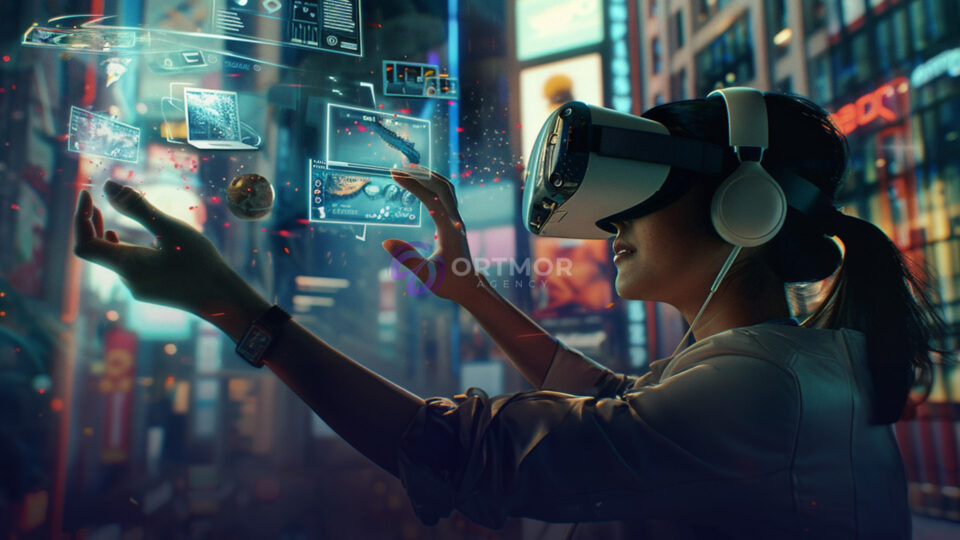
In today’s hyper-competitive market, grabbing consumer attention is not enough—brands need to create meaningful, engaging experiences that leave a lasting impression. As audiences grow more digitally inclined and expectations rise, traditional signage no longer does the job. The solution? A shift toward AR & VR Solutions that bring digital signage to life.
From retail stores to airports, exhibitions to real estate showrooms, AR & VR Solutions are transforming passive screens into interactive storytelling platforms. These technologies are helping businesses move beyond one-way messaging to offer immersive environments where users can interact, explore, and connect with the brand on a deeper level.
Let’s explore how this evolution is shaping the future of brand communication and how businesses are using AR and VR Solutions to power next-gen digital display strategies.
What is AR & VR Solutions in the Context of Digital Signage?
AR & VR Solutions refer to technologies that use augmented reality (AR) and virtual reality (VR) to simulate real-world environments or enhance them with digital overlays. In digital signage, these technologies are being used to create dynamic, responsive, and fully immersive content experiences.
Unlike static signage or basic LED scrolling boards, Ar Vr Solutions transforms a screen into an interactive medium. AR allows digital elements—such as product information, 3D models, or animation overlays—to appear on physical surfaces via smartphones or AR-enabled screens. VR goes a step further by placing the viewer inside a fully virtual environment, often through a headset or immersive display wall.
In both cases, digital signage shifts from being a passive display to an active brand engagement tool.
Why Are AR & VR Solutions Gaining Momentum in Brand Storytelling?
Brand storytelling has always been about more than just slogans and visuals—it’s about building an emotional connection. But with shrinking attention spans and overwhelming content, brands need new methods to tell their stories.
That’s where AR & VR Solutions make a real impact. These technologies grab attention by being interactive and unexpected. A user pointing their phone at a display to see a product come to life in 3D or stepping into a VR booth to take a virtual tour of a showroom instantly creates a personal connection. This level of engagement makes the message more memorable and meaningful.
In sectors like automotive, real estate, fashion, and tourism, AR and VR Solutions allow customers to experience products or environments before planning. That sensory connection builds trust and drives action—whether it’s making a purchase, booking a service, or simply remembering the brand longer.
How Are Brands Using AR & VR in Digital Signage Today?
Across industries, brands are using AR/VR solutions in creative ways to enhance customer engagement. Here are a few real-world examples:
Retail and Malls: Retailers now use AR-powered displays that allow customers to scan a screen with their phone and visualize how a product will look in their home. VR kiosks let users experience a new collection or explore different styles without stepping into a fitting room.
Trade Shows and Events: Exhibitors are replacing printed banners with interactive AR walls that respond to user gestures. VR headsets offer immersive brand tours, allowing visitors to experience the brand’s story through visual storytelling, gamification, and guided virtual walkthroughs.
Automotive Showrooms: Potential buyers can configure vehicles on a VR display, changing colors, interiors, and features in real time. AR apps let users scan cars in the showroom and get detailed specs, videos, and comparisons on the spot.
Real Estate: Builders and developers use VR displays at project sites or events to walk potential buyers through homes that haven’t been constructed yet. AR signs placed around the property let users visualize amenities or interiors in their actual location using mobile devices.
All these examples highlight one thing: AR & VR Solutions are not just add-ons—they are becoming essential tools in modern digital signage strategies.
Benefits That Go Beyond Engagement
While interaction is the primary draw, AR and VR Solutions also offer measurable business benefits.
- Improved Conversion Rates: When customers can visualize or experience a product, they make faster decisions. This leads to shorter sales cycles and better conversions.
- Data Collection & Analytics: Many AR and VR platforms collect user interaction data, giving brands insights into what’s working and what’s not. From dwell time to click patterns, businesses can refine content for better performance.
- Cost Savings: Virtual experiences reduce the need for physical inventory, mockups, and printed materials. Whether it’s a digital showroom or a virtual catalog, companies save on logistics and production.
- Scalability: Once created, AR and VR experiences can be reused across multiple platforms—on websites, in stores, at expos, or through mobile apps—offering consistency without repeated production costs.
- Environment-Friendly: By reducing reliance on physical materials, these solutions help brands lower their carbon footprint, aligning with sustainability goals.
The Future of Storytelling Is Experiential
As technologies evolve and become more accessible, AR & VR Solutions are no longer just for high-budget brands. From small retailers to large manufacturers, businesses are integrating these tools to stand out in crowded marketplaces.
Experience-led content is shaping the next wave of digital signage. Static displays are giving way to responsive, immersive formats that involve the viewer rather than simply informing them. AR/VR solutions offer the ideal mix of creativity, technology, and functionality to support this shift.
Conclusion
AR and VR are not trends—they are long-term strategies that redefine how digital signage connects with audiences. When used effectively, AR & VR Solutions turn simple screens into immersive brand experiences that engage, educate, and excite.
If your business is looking to elevate its customer engagement through interactive digital installations, it’s time to explore the power of Digital Display Solutions. With the right combination of storytelling, design, and tech, you can transform how people see and remember your brand.
