
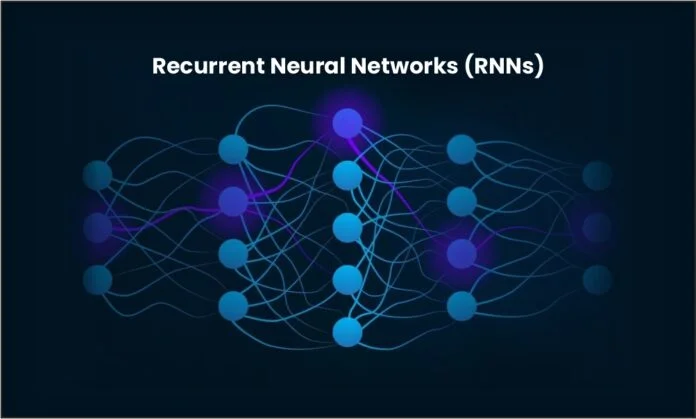
Think of a Recurrent Neural Network (RNN) as a storyteller with an extraordinary memory. It doesn’t just recall the last line of the story—it remembers the rhythm, tone, and emotions that led up to it. But like any storyteller, it can sometimes forget or exaggerate specific details if the tale stretches too long. This delicate act of remembering across time is what makes RNNs powerful—and what also makes them fragile. Their ability to process sequential data relies on a clever training technique called Backpropagation Through Time (BPTT), which can sometimes struggle with vanishing or exploding gradients. To those exploring this field through a Data Science course in Nashik, the RNN is both a fascinating subject and a challenging riddle waiting to be decoded.
The Pulse of Sequential Data
Every second of sound in a song, every word in a sentence, every heartbeat on an ECG monitor—these are not isolated data points. They form patterns where the past shapes the present. Traditional neural networks, which treat each input as separate, fall short in capturing these temporal relationships. RNNs, on the other hand, have a loop in their architecture—a thread that ties each moment to the next. It’s as if the network listens to its own echo to make sense of the current note in a melody.
Learners pursuing a Data Scientist course quickly realise how this looping mechanism empowers RNNs to excel in tasks like language translation, time-series forecasting, and speech recognition. Each prediction is influenced not only by current data but by the remembered rhythm of previous events. However, this very loop creates a computational challenge that requires deep understanding and mathematical precision.
Unfolding Time: The BPTT Mechanism
Backpropagation Through Time (BPTT) is like rewinding a movie frame by frame to understand how each scene influences the climax. When training an RNN, the network is “unrolled” across time steps—each representing a different moment in the sequence. Errors are then propagated backwards through these steps to adjust weights and improve future predictions.
In essence, BPTT connects the dots between cause and effect in a time-dependent system. The network doesn’t just learn what happened at one instant but how earlier decisions influenced later outcomes. Yet, as the timeline stretches, the challenge grows. Gradients—the mathematical signals that tell the network how much to adjust its parameters—can either fade into insignificance or explode uncontrollably, leading to instability. These two phenomena form the Achilles’ heel of RNN training.
The Whisper and the Shout: Vanishing and Exploding Gradients
Imagine whispering a message through a chain of fifty people. By the end, the message becomes faint or completely lost—that’s the vanishing gradient problem. Conversely, imagine everyone in the chain shouting louder than the last until the final person can’t make sense of the noise—that’s the exploding gradient issue. Both scenarios distort learning.
When gradients vanish, the network forgets long-term dependencies; it becomes skilled at handling short sequences but fails when the story is long. When gradients explode, the learning process becomes chaotic—weights oscillate wildly, and the network loses coherence. Researchers have tried various remedies: gradient clipping, orthogonal initialisation, and architectures like LSTM and GRU that control information flow through gating mechanisms. For students in a Data Science course in Nashik, mastering these mitigation strategies is like learning to tune an instrument—keeping the signal neither too soft nor too loud.
The Architecture That Learned to Remember
Long Short-Term Memory (LSTM) networks emerged as the antidote to the RNN’s forgetfulness. They introduced gates—tiny regulators that decide what to keep, what to forget, and what to output. These gates act like editors, ensuring the narrative remains coherent across long sequences. Instead of every memory flowing freely, only relevant details are allowed through.
While LSTMs and GRUs reduce the impact of vanishing gradients, they don’t eliminate complexity. Understanding when and how to use them still demands strong mathematical intuition and practical experience. In a Data Scientist course, learners often build sentiment-analysis or stock-prediction models to witness firsthand how RNN variants capture context over time. These exercises bridge theory and real-world application, revealing how precision and patience shape success in neural modelling.
Beyond the Gradient Problem: Modern Perspectives
Today, researchers push RNNs beyond traditional boundaries, blending them with attention mechanisms and transformers. The BPTT algorithm remains relevant, but newer architectures offer ways to parallelise learning and preserve long-range dependencies without backpropagating endlessly through time. Still, the foundational lessons from RNNs continue to echo: data is temporal, context matters, and memory is fragile.
In an era where predictive systems power everything from financial forecasts to conversational AI, understanding BPTT is not just academic curiosity—it’s a cornerstone of intelligent modelling. Learners who grasp these principles step beyond black-box learning to appreciate how machines “think” across sequences truly.
Conclusion
Recurrent Neural Networks stand as poetic reminders that memory—whether human or artificial—is both a gift and a challenge. The Backpropagation Through Time algorithm enables them to learn from sequences, yet it also exposes them to the pitfalls of vanishing and exploding gradients. Over the years, innovations like LSTMs have taught us that intelligence is not about remembering everything but remembering the right things.
For those delving into the intricacies of RNNs through structured learning, such as a Data Science course in Nashik, this topic offers far more than equations—it provides a glimpse into the very fabric of sequential understanding.
For more details visit us:
Name: ExcelR – Data Science, Data Analyst Course in Nashik
Address: Impact Spaces, Office no 1, 1st Floor, Shree Sai Siddhi Plaza,Next to Indian Oil Petrol Pump, Near ITI Signal,Trambakeshwar Road, Mahatma Nagar,Nashik,Maharastra 422005
Phone: 072040 43317
Email: [email protected]
