
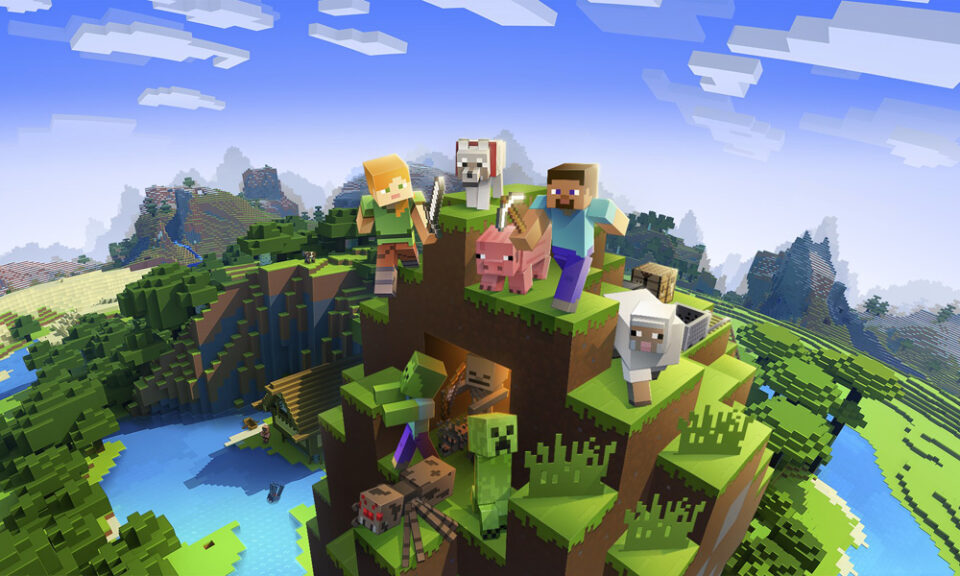
The best Minecraft games span multiple modes and difficulty levels for children and adults with varying skill sets. Young players find peaceful building experiences ideal for their developmental stage, while adults gravitate toward survival challenges. Through minecraftforfreex.com, families access different game types matching their capabilities and goals. Adjustable difficulty settings separate creative builders from survival enthusiasts. Educational variants offer structured learning alongside entertainment. Each version serves distinct purposes within the broader Minecraft ecosystem.
Creative mode advantages
The absence of survival elements defines creative mode’s appeal. Players face no health concerns, hunger meters, or hostile creatures. This removal of pressure creates an environment where building takes centre stage. Young children particularly benefit from this setup since combat mechanics often exceed their coordination abilities. Resource limitations disappear entirely—every block type becomes immediately available without mining or crafting prerequisites. Players can launch ambitious architectural projects that survival mode’s gathering requirements would render impractical. Flying serves as the creative mode’s signature feature. Movement across massive constructions becomes effortless.
Educational implementations
- Minecraft Education Edition delivers curriculum-specific lessons across mathematics, science, history, and computer programming through interactive gameplay mechanics designed for academic settings
- Chemistry systems let students construct molecular compounds, run virtual experiments, and grasp atomic structures through tangible block-based learning methods
- Historical projects involve reconstructing ancient buildings, studying architectural evolution, and exploring cultural heritage through accurate period-appropriate construction
- Command blocks and redstone circuits serve as coding introduction tools, teaching logical thinking and algorithmic problem-solving beyond gaming contexts
- Group projects in shared worlds foster communication abilities, collaborative skills, and collective problem-resolution in structured classroom environments
The educational versions preserve core gameplay while layering structured objectives over entertainment. Homeschooling families, traditional schools, and education-focused parents all use these editions. Assessment features track individual progress, measure participation, and document skill acquisition through integrated analytics. Teachers maintain control over student activities while monitoring learning outcomes.
Social multiplayer dynamics
Servers facilitate social experiences where different age groups interact, cooperate on builds, and join community events from creative showcases to competitive minigames. Family-operated servers let parents and children share adventures. Private friend groups create controlled spaces free from inappropriate content or problematic strangers found on public servers. Server types vary enormously. Role-playing communities develop elaborate fictional worlds. Competitive arenas host player-versus-player battles. Creative showcases display impressive architectural achievements. Survival economies simulate complex trading systems.
Minigame servers offer quick parkour challenges, combat arenas, and puzzle maps, fitting brief play sessions. Large public servers host thousands simultaneously, creating thriving ecosystems with distinct cultures and established hierarchies. Parental supervision tools help families manage online interactions. Private realms (subscription-based hosting) allow easy server creation without technical expertise. External voice chat applications enable real-time coordination during collaborative projects, though younger players require monitoring to prevent inappropriate conversations.
Personalization options
Visual modifications through texture packs appeal to different age groups. Cartoon aesthetics with bright colours attract younger children. Realistic high-definition graphics draw teenagers and adults seeking immersion. These cosmetic changes never affect core mechanics only appearances shift based on preference. Difficulty granularity accommodates progressive skill development. Beginners start easy, then increase the challenge as competence grows. Peaceful mode removes all hostile creatures for building-focused children. Hard difficulty provides intense survival experiences for veterans.
Custom settings allow precise control over specific elements: damage multipliers, enemy spawn rates, and resource scarcity. Players fine-tune challenge levels matching their exact comfort zones. The best Minecraft experiences divide across creative building for young players, educational editions for learning integration, survival challenges for experienced gamers, multiplayer for social connection, and customization for personal preference. Selection criteria include age appropriateness, existing skill levels, and intended outcomes
