
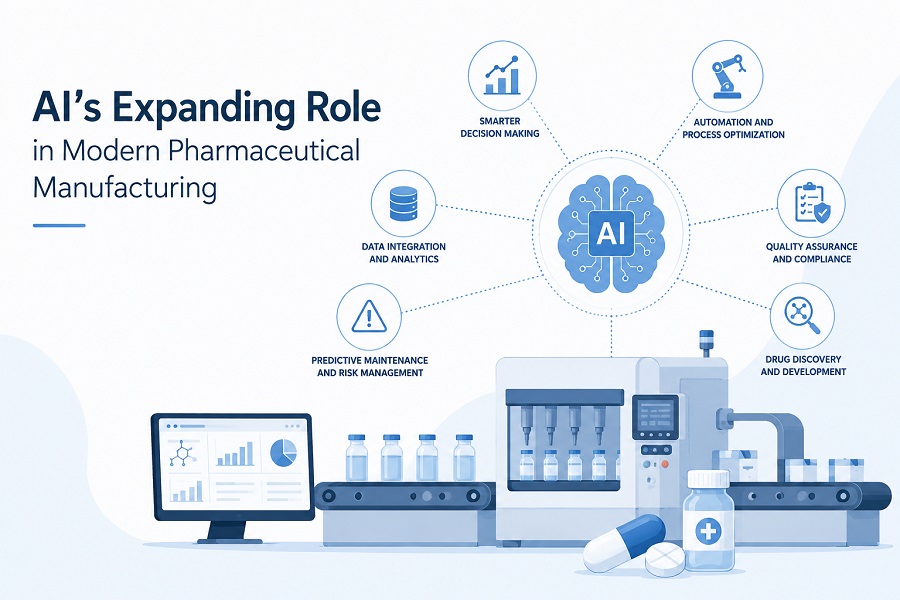
Pharmaceutical manufacturers are under constant pressure to deliver products that meet strict standards for quality, consistency, and regulatory compliance. As production environments become more complex and data-intensive, artificial intelligence is emerging as a valuable tool for improving performance across the manufacturing lifecycle.
Rather than transforming operations overnight, AI is creating value through ongoing improvements in monitoring, analysis, and process control. These enhancements help manufacturers make better use of data, reduce variability, and strengthen operational reliability without compromising the human expertise that remains central to pharmaceutical production.
Enhancing Process Control and Product Quality
Producing pharmaceutical products requires careful management of numerous variables. Changes in raw material characteristics, equipment performance, environmental conditions, and process settings can all influence production outcomes. Maintaining consistency across batches requires constant attention and precise control.
AI helps manufacturers gain greater visibility into these variables by processing large volumes of operational data and identifying trends that might otherwise go unnoticed. Advanced analytics can highlight deviations early, allowing teams to take corrective action before product quality is affected.
This capability supports a more proactive approach to manufacturing. Instead of reacting to problems after they occur, organizations can identify potential issues sooner and make adjustments that help maintain stable production conditions.
Moving Beyond Traditional Automation
Conventional automation systems are designed to execute predefined tasks according to fixed rules. While highly effective for repetitive processes, these systems generally cannot adapt when conditions change.
Artificial intelligence introduces a different level of capability. Machine learning algorithms continuously evaluate new information and refine their models based on actual performance data. This allows manufacturing systems to become more responsive and adaptive over time.
One area where this approach delivers significant value is predictive maintenance. By monitoring equipment performance and identifying subtle changes in operating behavior, AI can help detect emerging mechanical issues before they lead to failures. Maintenance teams can then schedule repairs more strategically, reducing downtime and minimizing disruptions to production schedules.
AI can also support process optimization by identifying opportunities to improve efficiency, reduce waste, and maintain tighter control over critical manufacturing parameters.
Improving Visibility Across the Supply Chain
The effectiveness of pharmaceutical manufacturing depends on more than production alone. Supply chain performance plays a major role in ensuring materials are available when needed and products reach the market efficiently.
AI-driven forecasting tools can analyze demand patterns, inventory levels, supplier performance, and market conditions to improve planning accuracy. These insights help manufacturers anticipate potential disruptions, manage inventory more effectively, and make better-informed purchasing decisions.
As supply chains become increasingly global and interconnected, this level of visibility can provide a meaningful operational advantage.
Supporting Regulatory Compliance Through Better Data Management
Compliance remains one of the most important considerations in pharmaceutical manufacturing. Every process must be documented, validated, and traceable to meet industry regulations and quality standards.
AI can help streamline these responsibilities by improving how information is collected, organized, and analyzed. Natural language processing technologies can assist with reviewing regulatory documentation and extracting relevant information more efficiently. At the same time, advanced monitoring and data management systems help maintain accurate records throughout the manufacturing process.
By strengthening traceability and documentation practices, AI supports both operational efficiency and regulatory readiness.
Building a More Resilient Manufacturing Environment
As pharmaceutical manufacturers continue to adopt digital technologies, AI is becoming an increasingly important part of long-term operational strategy. Its value extends beyond automation, helping organizations improve decision-making, strengthen process reliability, and respond more effectively to changing conditions.
The future of pharmaceutical manufacturing will continue to depend on skilled professionals, rigorous quality standards, and strong compliance practices. AI serves as a powerful complement to those foundations, enabling manufacturers to create more efficient, consistent, and resilient operations that support the ongoing advancement of healthcare.
For additional insight into how AI is redefining standards in pharmaceutical production, explore the visual guide accompanying this article from Advanced Technology Services, a provider of predictive maintenance services.

