
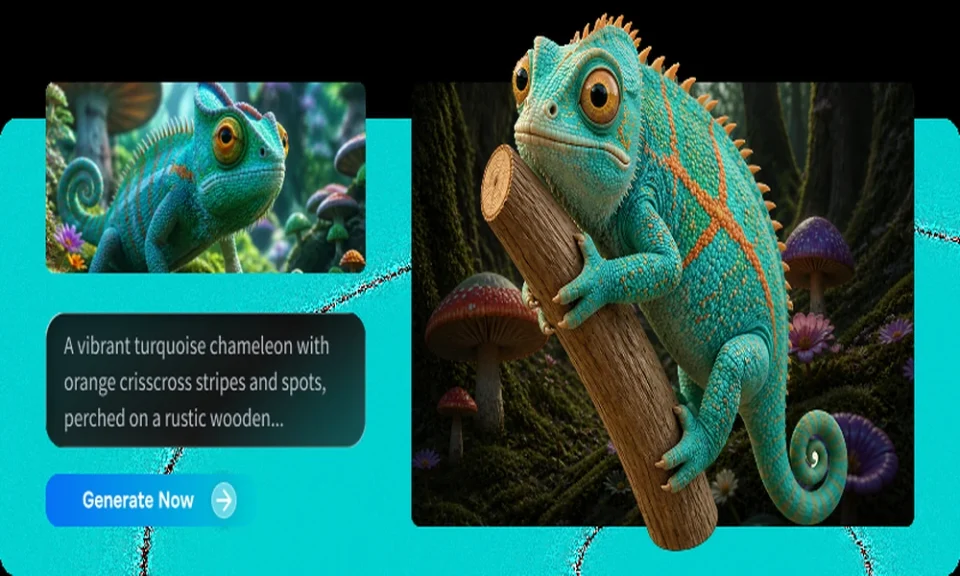
V2Fun is a browser-based AI 3D creation platform that helps users turn prompts or reference images into 3D models, rigged characters, motion-ready assets, and exportable files in one connected workflow. If you are looking for an all-in-one AI 3D model platform for character creation, that matters because the real bottleneck is usually not mesh generation by itself. It is the gap between image preparation, modeling, rigging, motion testing, and downstream handoff.
For character-led work, V2Fun is a strong option because those stages stay connected inside one browser workflow. That does not mean every result is production-final. It means the platform is well aligned with the part of the process where creators need to move from a visual idea to an animatable prototype quickly and with less friction.
What all-in-one should mean for character work
An all-in-one platform should do more than produce a static 3D preview. For character creation, it should help you prepare a usable reference, generate the model, rig it, test motion, and export it in formats that still work in Blender, Maya, Unity, or Unreal Engine.
That is where V2Fun fits well. Its workflow brings together AI image generation, 3D model creation, humanoid auto-rigging, motion tools, video motion capture, retopology, and multi-format export. The value is not just that all of those features exist. The value is that they support one another in a connected sequence.
The strongest image-to-character workflow on V2Fun
The most reliable way to use V2Fun for character work is to treat the image stage seriously rather than as a quick pre-step.
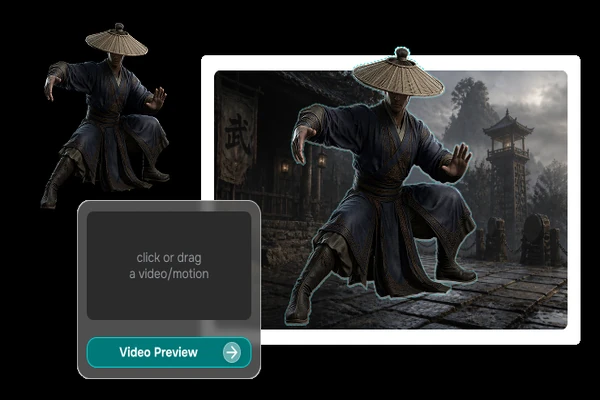
Start with a clean reference image. A full-body character with even lighting, low occlusion, and a readable silhouette will usually produce a stronger result than a dramatic pose with shadows, props, and cropped limbs. If you do not already have a good source image, V2Fun can help generate or refine one before you move into 3D.
For character modeling, image-led generation is usually the better default. Text-only generation is useful for rough exploration, but image-based input gives the model stage stronger constraints for shape, styling, and proportion. If you need better completeness, especially for animation readiness, multi-view input is the more serious route.
Why rigging and motion are the real test
Many weak AI results look acceptable until the character starts moving. That is why rigging and motion testing matter so much in this workflow.
V2Fun’s auto-rigging is mainly aimed at humanoid characters, so input quality matters. A clean A-pose or T-pose is safer than a dynamic action pose. Limbs should be visually separated, and clothing, hair, or accessories should not merge into the body in ways that confuse joint detection.
Once the model is rigged, motion testing becomes the real checkpoint. V2Fun supports built-in Motion Library tests, uploaded BVH or VMD motion files, and video motion capture from single-person MP4 footage. That gives creators a faster way to answer the question that matters most: does this character still work once it moves?
Export is part of the promise
An all-in-one workflow only becomes genuinely useful if the result can leave the platform cleanly when needed.
V2Fun supports export formats such as FBX, GLB, USDZ, and OBJ, which makes it practical for game, DCC, web, or AR handoff. FBX is often the strongest default when the next step is character animation or engine work. OBJ remains useful for broader editing compatibility, while GLB and USDZ are stronger for web and AR presentation.
That export layer is important because it means V2Fun does not have to replace every other tool to be valuable. It shortens the path to a usable character asset, then lets the workflow continue elsewhere when more precise cleanup is needed.
Where the all-in-one promise stops

V2Fun is broad, but it still has real boundaries. Its current auto-rigging flow is mainly for humanoid characters, not quadrupeds or more unusual rig structures. Finished video rendering is still presented as a planned direction rather than a current built-in feature. Film-grade final output is also outside the strongest promise of the platform today.
That does not weaken the use case. It clarifies it. V2Fun is strongest as a connected image-to-character workflow for fast creation, rigging readiness, motion testing, and export. Traditional tools still matter when the job depends on exact topology, custom rigging, advanced materials, or final polish.
Final verdict
If by all-in-one AI 3D model platform you mean the shortest practical path from reference image to a rigged, testable, exportable character, V2Fun is a strong first platform to evaluate. Its real strength is workflow continuity: image preparation, modeling, humanoid auto-rigging, motion testing, and export inside one browser environment.
The best results still depend on good inputs and realistic expectations. Use clean images, favor rig-friendly poses, move to multi-view when completeness matters, and keep Blender or Maya in reserve for finishing work. Used that way, V2Fun fits the real image-to-character workflow better than tools that only solve one isolated step.
FAQ
What kind of image works best for image-to-character workflows?
A full-body image with clear subject separation, even lighting, and low occlusion is usually the safest starting point.
Can V2Fun rig any type of 3D character?
No. Its current auto-rigging workflow is mainly for humanoid character models.
When should I use FBX instead of another export format?
Use FBX when the character needs to preserve skeleton and animation data for downstream engine or DCC work.
Can I use V2Fun outputs commercially?
Commercial usage may be available on Pro and higher plans, subject to V2Fun’s current subscription page and official terms.
