
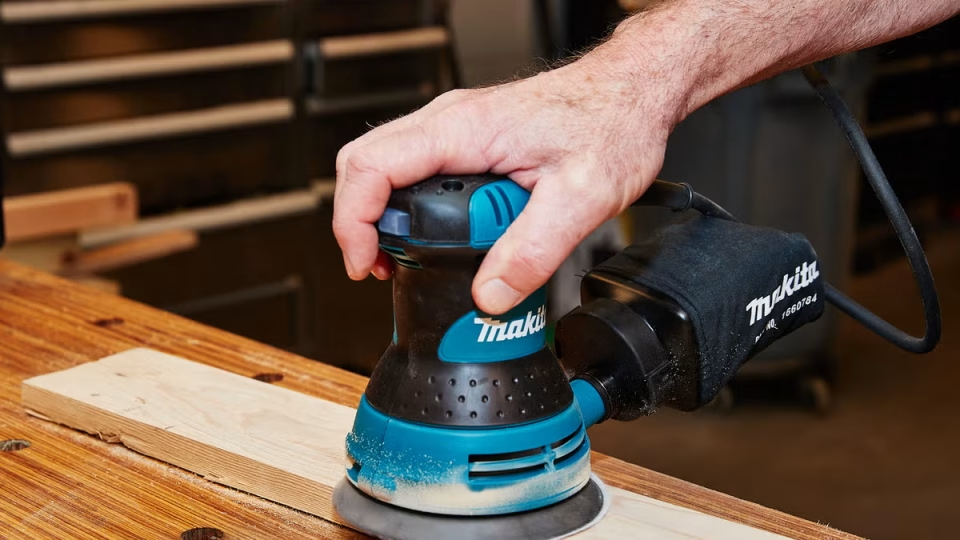
There is a category of finishing work that separates a genuinely polished result from one that merely looks adequate from a distance. Getting into tight corners, following curved profiles, smoothing around spindles and mouldings, and reaching the recessed areas of furniture or cabinetry that flat orbital sanders cannot touch — this is the domain of the detail sander, and it is where the quality of your tool makes the most visible difference to the final outcome.
Detail sanding is often treated as an afterthought in tool planning — something handled with a folded piece of sandpaper and a lot of patience. But for anyone who does this work regularly, the right powered tool transforms what is otherwise the most tedious part of a finishing project into something controlled and consistent.
What Makes Detail Sanding Different
A standard random orbit sander covers large flat surfaces efficiently, but its circular pad is physically incapable of reaching into the corners where two surfaces meet at 90 degrees. Hand sanding in these areas is slow, produces inconsistent results, and is hard on the hands during any significant project. Detail sanders solve this problem with a pointed triangular or multi-profile pad that lets the tool reach exactly where a round pad cannot.
The challenge is that most detail sanders on the market sacrifice either power or ergonomics in pursuit of the small form factor. An underpowered motor struggles against harder materials or denser abrasives. A poorly balanced tool causes hand fatigue during extended use. Finding a tool that delivers genuine sanding performance in the detail format is the core selection challenge for anyone serious about finish quality.
The HOZO NeoSander Premium Combo
The HoZo detail sander from HOZO addresses the performance gap in the detail category directly. The NeoSander Premium Combo pairs a capable motor with a tool design built around real workshop use — the ergonomics are considered, the vibration management is meaningful, and the accessory system gives the tool genuine versatility across different applications rather than locking it into a single pad profile.
The premium combo format means the tool comes with the accessories needed to start working immediately across a range of applications, rather than requiring separate purchases to achieve the versatility the tool itself is capable of. For users new to powered detail sanding, this is a practical advantage.
Applications Where Detail Sanders Deliver
The most common application is furniture restoration — refinishing chairs, tables, and cabinetry where the detail work around joints, mouldings, and carved elements would be impossible to address with larger tools. Staircase spindles and handrail profiles are classic detail sander territory. Automotive bodywork around trim and panel edges, intricate woodworking projects, and the finishing work around window and door frames all benefit from the precision a good detail tool provides.
Abrasive Selection for Detail Work
Detail sanders use purpose-made triangular hook-and-loop abrasive sheets that attach to the pad surface. Grit selection follows the same principles as larger sanding work — coarser grits for material removal and shaping, medium grits for intermediate smoothing, fine grits for final preparation before finishing. Having a range of grits available at the start of a project avoids interruptions mid-task when the next grit in the sequence is needed.
The NeoSander is available with a selection of abrasive grits included in the premium combo, covering the typical progression from initial sanding through to pre-finish preparation. This all-in-one approach is particularly useful for projects where different areas of the workpiece require different levels of material removal before the final finishing stages.
Getting the Most From Your Detail Sander
The technique for effective detail sanding differs slightly from large-area work. The small pad means the tool is easier to tilt or angle into corners, and light consistent pressure produces better results than forcing the tool into the work. Moving the tool in short, controlled passes along the grain direction on wood surfaces avoids cross-grain scratches that would show under a clear finish.
Regular abrasive changes are particularly important with detail work — the small pad surface loads up faster than a larger sanding disc, and continuing with a loaded abrasive generates heat and produces scratches rather than removing material efficiently.
