
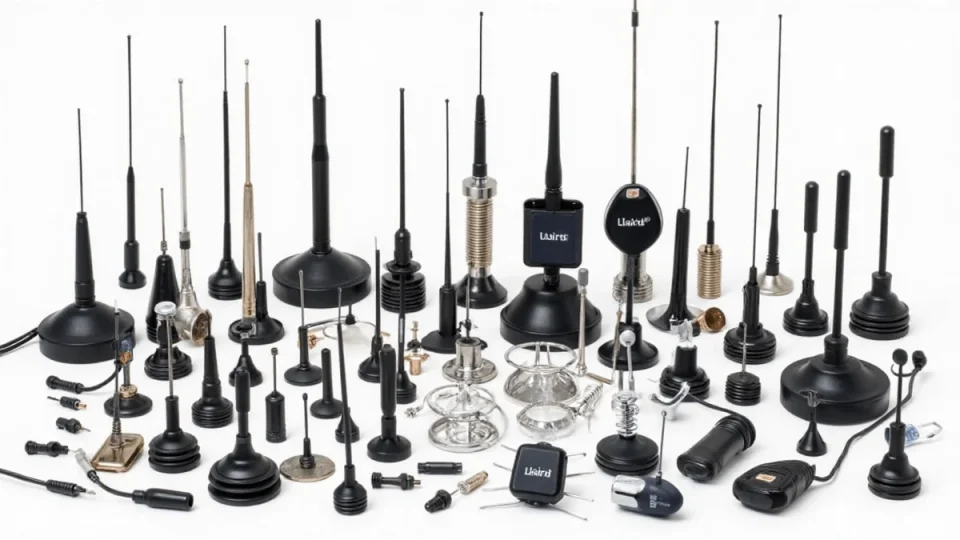
A CB radio can have plenty of useful features, but its real-world performance depends heavily on something that is sometimes treated as an afterthought: the antenna. Quality CB antennas can make the difference between a weak, frustrating signal and clear communication over a useful distance.
Truck drivers have understood this for decades. So have off-road enthusiasts, RV travelers and people who simply want an independent form of vehicle-to-vehicle communication. A carefully selected antenna, combined with the right radio and proper installation, creates a system that can remain useful in places where mobile communication may be inconvenient or unreliable.
That is why choosing CB radios and antennas as a complete system makes more sense than concentrating on the radio alone.
Why CB Antennas Matter So Much
It is easy to assume that buying a more expensive radio automatically means better range. In reality, the antenna system plays an enormous role in determining how effectively the radio can transmit and receive.
The radio generates the signal. The antenna has to get that signal out into the world.
A poorly selected or incorrectly installed antenna can therefore limit an otherwise capable radio. On the other hand, good CB antennas, properly mounted and tuned, can help a relatively straightforward setup perform impressively well.
Antenna location matters too. The vehicle itself becomes part of the overall installation, which means mounting position, available ground plane, cable routing and surrounding metal structures can affect performance.
This is why experienced CB users often say something along the lines of: “Don’t spend your entire budget on the radio and then buy the cheapest antenna you can find.”
There is considerable truth behind that advice.
Different Antennas for Different Vehicles
There is no single antenna that is perfect for every situation. A long-haul truck has different installation requirements from a Jeep. A pickup owner may want something completely different from somebody installing a base station.
Magnetic mount antennas are popular because installation can be relatively straightforward. They are especially attractive to drivers who do not want to make permanent modifications to their vehicle.
Fiberglass antennas provide another practical option. Many are available in different lengths and some feature tunable tips, allowing the installation to be adjusted for better performance.
Then there are classic stainless-steel whip designs. A 102-inch whip remains instantly recognizable among CB enthusiasts and offers characteristics that continue to make it attractive for certain installations.
CB Radio Supply carries several styles of CB antennas, including magnetic mount models, fiberglass designs, stainless-steel whips and complete antenna kits. Brands represented in the selection include names such as Wilson, Firestik, Hustler, Stryker and Browning.
The important point is choice. An antenna should fit the vehicle, installation position and intended use rather than simply looking impressive.
Pairing CB Radios and Antennas Correctly
Buying components separately without considering compatibility can lead to unnecessary problems. A better approach is to think about the entire communication system.
That includes the radio, antenna, mount, coaxial cable and connectors.
Suppose a pickup owner wants reliable communication during off-road trips. A compact radio might be ideal inside the cab because space is limited. However, installing an unsuitable antenna in a poor location could undermine the entire setup.
Another driver might prioritize highway communication and have plenty of room for a larger antenna. In that situation, a longer fiberglass or whip antenna could make more sense.
The best combination of CB radios and antennas is therefore not necessarily the most expensive combination. It is the one that suits the actual vehicle and operating conditions.
Don’t Ignore the Coax Cable
The coaxial cable connecting the radio to the antenna deserves attention as well.
Think of the system as a chain. If one component is poorly installed or inappropriate for the application, overall performance can suffer.
Different installations may use cables such as RG58 or RG8X, while base-station setups can have their own requirements. Cable length, routing and connector quality all deserve consideration.
Avoid unnecessarily tight bends and protect the cable from locations where doors, seats or other moving components could repeatedly crush it. A clean installation is not simply about appearance. It can contribute to reliability over time.
SWR Tuning Is an Essential Step
Installing the antenna does not necessarily mean the job is finished.
Checking the standing wave ratio, usually shortened to SWR, is an important part of setting up many CB systems. SWR gives you an indication of how effectively radio-frequency energy is being transferred through the antenna system.
High SWR can indicate an installation or tuning problem.
For this reason, an SWR meter is a useful tool when setting up CB radios. Depending on the antenna, adjustments may involve changing the effective antenna length or checking the mounting, grounding, connectors and coaxial cable.
Taking a little extra time during installation can save considerable frustration later.
What Should You Look for When Choosing an Antenna?
Start with your vehicle and how you actually intend to use the radio.
A driver who occasionally uses a CB during road trips probably has different priorities from a professional trucker who communicates throughout the working day. Likewise, an off-road vehicle may require an antenna capable of handling vibration, branches and difficult terrain.
Consider antenna length, mounting method, durability, cable requirements and tuning options. Height restrictions matter too. A very tall antenna might offer attractive performance characteristics, but it may be impractical if the vehicle regularly enters garages or other areas with restricted clearance.
For some drivers, a shorter flexible fiberglass antenna represents the better compromise.
Others will happily accept additional height in exchange for the characteristics of a larger antenna.
This is exactly why comparing several CB antennas before purchasing is worthwhile.
Complete Kits Can Simplify Installation
Building a CB setup component by component gives experienced users plenty of flexibility. Beginners, however, may appreciate a complete kit.
A kit can combine an antenna with compatible mounting hardware, coax cable and other installation components. It removes some of the uncertainty surrounding individual parts and makes it easier to understand what is actually required.
CB Radio Supply offers individual components as well as antenna kits, making it possible to approach the installation according to experience level and vehicle requirements.
This can be particularly useful for someone purchasing their first system.
Instead of wondering, “What else am I missing?”, the buyer can focus on selecting equipment appropriate for the intended application.
CB Communication Still Has a Place on the Road
Smartphones have changed communication dramatically, but they have not made CB radios irrelevant.
CB communication does not depend on exchanging phone numbers between drivers. It can provide direct local communication between equipped vehicles, which remains useful for truckers, convoy travel, off-road groups and other road users.
There is also something satisfyingly straightforward about it. Turn on the radio, select the appropriate channel and communicate.
But the quality of that experience starts with the hardware.
A carefully selected radio deserves an equally carefully selected antenna. Good mounting hardware, suitable coaxial cable and proper tuning complete the system.
For anyone planning a new installation or upgrading an existing setup, it therefore makes sense to look beyond the radio itself. Choosing the right CB antennas and treating the radio and antenna as one complete communication system can deliver clearer reception, more effective transmission and a setup that performs the way it was intended to perform.
