
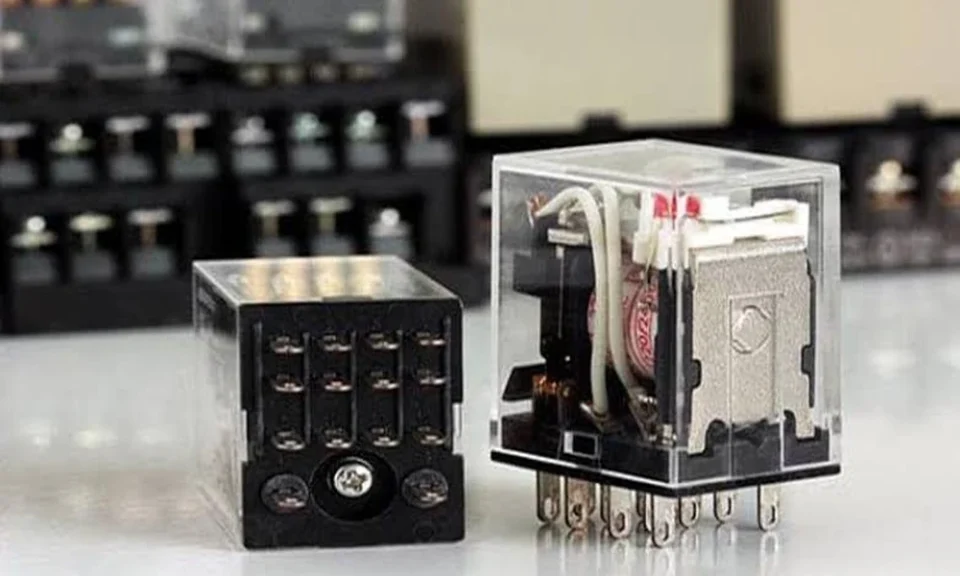
Walk through an older substation or industrial switchroom and you may still find electromechanical relays, with spinning discs, small coils, and glass covers that have been in service for decades. They have a long record of reliability, so it is natural to wonder why so many facilities are replacing them. The answer has less to do with failure and more to do with what modern protection can offer.
A digital protection relay does the same core job as an older device, detecting faults and signaling a breaker to open, but it adds measurement, communication, and diagnostics that older designs cannot match. Here is how the two compare and what to consider when planning an upgrade.
How Electromechanical Relays Work
Electromechanical relays use magnetic forces to move mechanical parts. In a classic overcurrent relay, current flowing through a coil turns a disc, and the faster the disc turns, the sooner it closes a contact to trip the breaker. They are simple, rugged, and well understood.
But they have limits.
- One function per device: Each relay typically handles a single protection task.
- Mechanical wear: Moving parts, bearings, and springs can drift or wear over time.
- Limited accuracy: Settings are adjusted by dials and can shift.
- No data: They provide little information about what happened during a fault.
- Maintenance needs: Periodic cleaning and calibration are required.
How Digital Relays Work
Digital, or numerical, relays convert incoming signals into digital data and use a microprocessor to run protection algorithms. Because the logic is in software, one device can perform many functions.
- Multiple protection functions: Overcurrent, ground fault, voltage, frequency, and more in one unit.
- Precise, stable settings: Values are stored digitally and do not drift.
- Metering and monitoring: Real-time measurements are available without extra instruments.
- Event and fault records: Detailed logs and waveforms support analysis.
- Self-supervision: The relay can check its own health and raise an alarm.
- Communication: Standard protocols connect it to control and monitoring systems.
Side-by-Side Comparison
- Functions: Electromechanical devices usually perform one; digital relays perform many.
- Accuracy and stability: Digital designs hold settings with high consistency.
- Diagnostics: Digital relays report their own status and record events.
- Wiring and panel space: One digital relay can replace several older devices.
- Communication: Digital relays integrate with modern control systems.
- Maintenance: Digital devices need less routine calibration, though they require software and firmware management.
- Spare parts: Parts for older models can become hard to find.
Reasons Facilities Upgrade
- Reliability concerns: Aging relays can drift, and replacement parts may be scarce.
- Better data: Fault records help engineers find root causes and prevent repeat events.
- Safety improvements: Faster, more precise protection and features like arc flash detection reduce risk.
- Integration: Remote monitoring and standard communications support modern operations.
- Reduced maintenance: Self-checking reduces manual testing effort.
- Regulatory and insurer expectations: Some organizations upgrade to meet current practices.
Retrofit Options
Replacing relays does not always mean rebuilding the panel. Retrofit relays are designed to replace specific older models with minimal changes to cutouts and wiring. Some can even be powered from the current transformer circuit, which helps where auxiliary power is limited. This approach can speed up projects and reduce downtime.
Things to Plan For
An upgrade deserves careful planning.
- Take inventory: List existing relays, their functions, and settings.
- Document the current scheme: Understand how the old devices work together.
- Choose compatible replacements: Check form factor, ratings, and functionality.
- Review settings and coordination: Do not just copy old values; translate them correctly to the new device.
- Plan the outage: Coordinate work windows to limit disruption.
- Test thoroughly: Commission each relay with proper testing.
- Train staff: New software and procedures need familiarity.
Cybersecurity and Software Management
Digital relays bring a new responsibility: protecting connected devices. Good practice includes controlling access, managing firmware updates, using secure communication settings, and keeping backups of configuration files. Utilities and facilities often follow guidance from agencies like the Department of Energy on securing critical infrastructure.
Do Not Rush to Replace Everything
Not every old relay needs to go immediately. A sensible approach is to prioritize, starting with the most critical circuits, those with a history of problems, or equipment that is hard to maintain. Phased upgrades spread cost and risk over time.
Looking Ahead
Electromechanical relays earned their reputation, but modern facilities demand more than a single reliable trip. With better data, flexible protection, and tighter integration, digital relays give operators clearer insight and stronger safeguards. For many sites, upgrading is less about replacing something broken and more about gaining control over what happens when something goes wrong.
